Industry playbook // Trucking & trailers

Fleet Washing for Trucking & Trailer Operations

Tractors, trailers, and reefers accumulate road film, brake dust, and lower-assembly grime across long routes. Presentation, DOT-readiness, and corrosion control drive wash cadence.

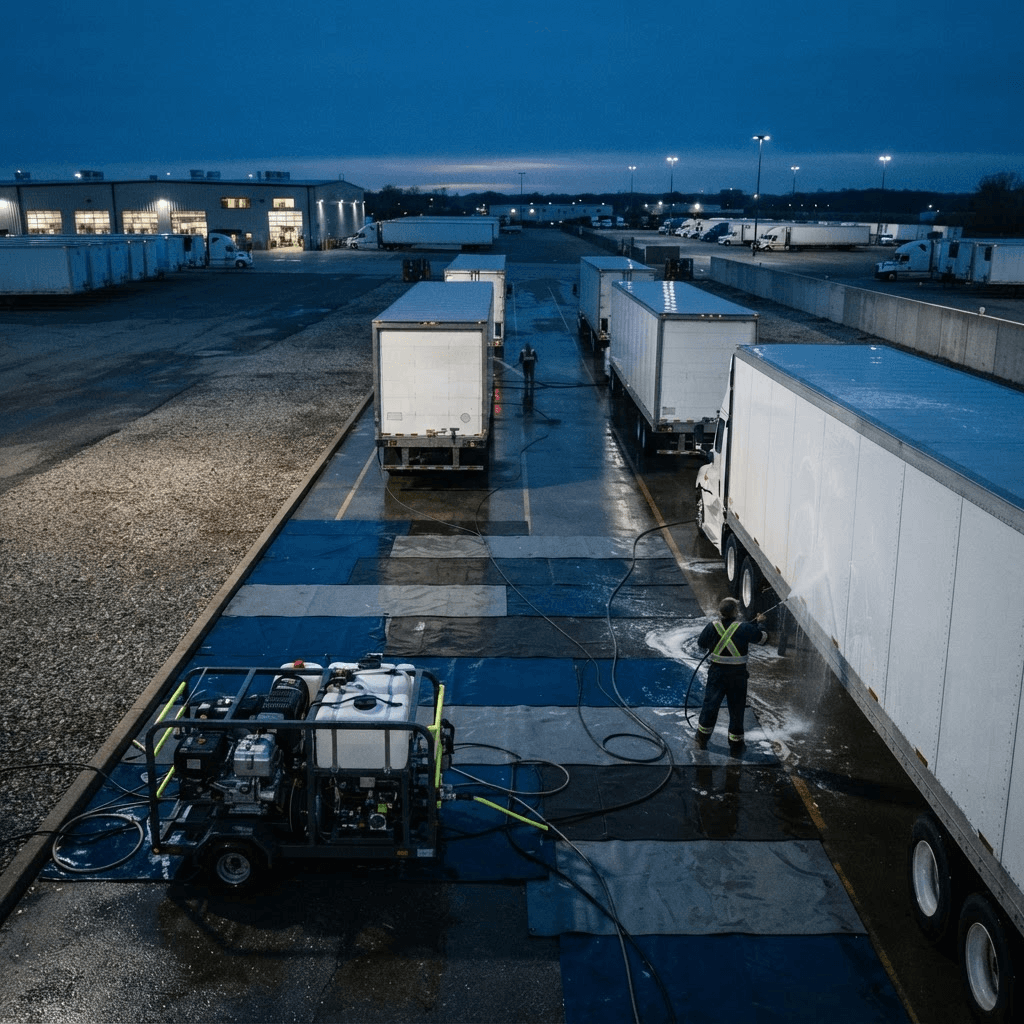
Illustrative visualization of tractor-trailers staged for mobile fleet washing
AI-generated illustrative visualization. Not a customer, crew, location, or completed job.

Risk register

Operating constraints

  • Salt and de-icer corrosion on undercarriage and lower panels
  • Bug and exhaust film degrading paint and decals
  • Trailer washouts requiring separate sanitation handling
  • Yard access and staging around active loading operations

Intake brief

Inputs that change the plan

  • Tractor and trailer counts by type
  • Route mileage and regional soil exposure
  • Reefer or dry-van washout requirements
  • Available night or weekend service windows

Control point

Site-specific review

Method, water, recovery, crew, operating window, acceptance criteria, and cadence remain subject to site and scope confirmation.

Use procurement toolkit →

Direct answers

Trucking & trailers fleet washing FAQ

How often should trucks and trailers be washed?

Cadence depends on route soil, corrosion exposure, and presentation standards. Heavy winter or coastal exposure often reviews weekly; lighter regional routes review biweekly or monthly. A site review sets the plan.

Can trailers be washed out during the same visit?

Interior washouts can be scoped alongside exterior washing, but sanitation-sensitive loads require separate handling, water sourcing, and disposal planning confirmed before service.

Operational guide reviewed 2026-08-25. Requirements vary by site and contract.