Car Interior Drying and Mold Prevention: Know When Detailing Is Not Enough
Written and reviewed by SLYYYDE N WASH Fleet Operations · United States commercial service guidance
Key takeaways
Find and stop the water source before repeated cleaning.
Do not close up a damp vehicle and hope it dries.
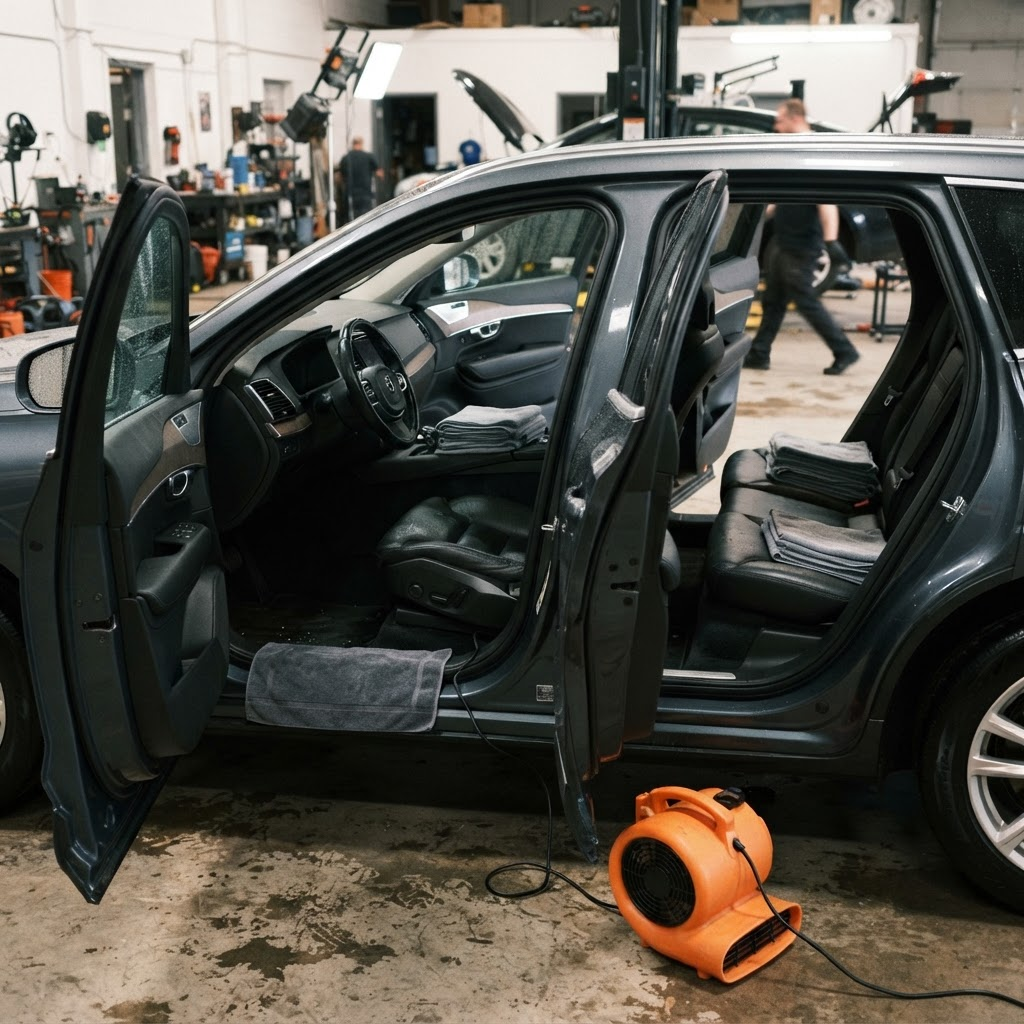
Use airflow and time appropriate to the material and weather.
Escalate visible growth, flood exposure, or recurring moisture.
What causes interior moisture to return?
Door seals, sunroofs, windshield work, blocked drains, HVAC condensation, spills, flooding, and wet cargo can introduce water. If the source is not fixed, an interior detail can be temporary at best.
How should a detailer document drying?
Record the materials cleaned, extraction method, airflow, weather, access, and any areas that remain damp. Customers should receive a realistic handoff rather than a claim that the vehicle is dry when padding or hidden layers cannot be verified.
When is this a remediation job?
Visible growth, sewage or flood water, persistent contamination, damaged electronics, or extensive saturated padding exceed many detailing scopes. Refer to qualified remediation or repair professionals and do not mask the problem with fragrance.
Moisture decision guide
Continue your research
Pet Hair and Odor Guide — Set realistic expectations for pet hair, dander, stains, and odors by separating removal, cleaning, drying, and source repair.
Child Seat Detailing — Plan interior cleaning around child-seat removal, installation, manufacturer instructions, drying, and safety boundaries.
Sources and limitations
National Weather Service — Heat Safety
Published prices and schedules are planning references, not universal facts or site-specific quotes. This article provides operational information, not legal advice. Confirm current requirements with the authority responsible for your site.
Frequently asked questions
Can a detailer remove mold from a car?
Some providers handle limited surface work, but visible growth, flooding, and hidden contamination require a qualified assessment and may exceed detailing.
How long does an interior take to dry?
There is no universal time; material, extraction, humidity, airflow, temperature, and moisture depth control the result.
Can air freshener solve a damp-car smell?
No. It may mask an odor while the source remains.