COMMERCIAL FLEET OPERATIONS // BUYER'S GUIDE
Mobile fleet washing: the complete buyer's guide
How to set wash frequency, compare vendors, plan the site, scope heavy trucks and trailers, and understand the real drivers behind a commercial fleet quote.
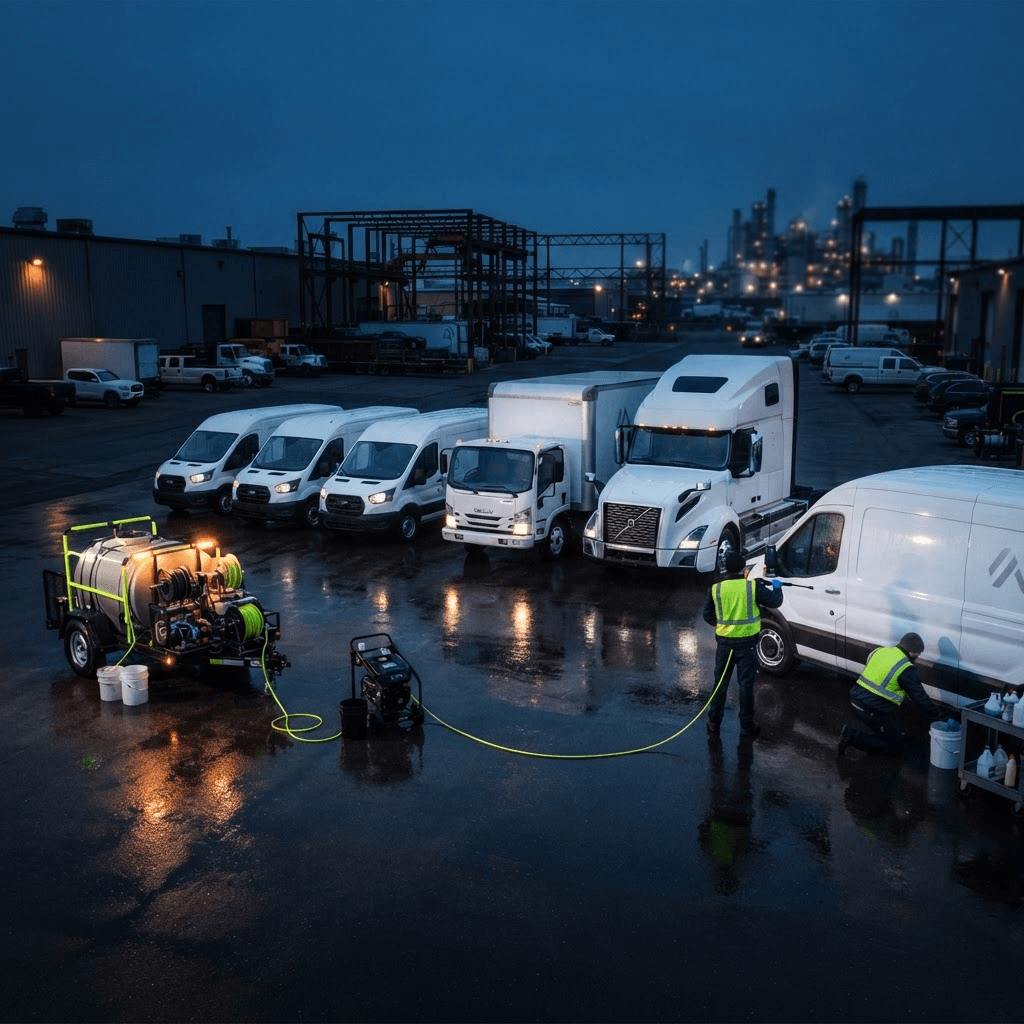
Mobile fleet washing brings a crew and equipment to the location where commercial vehicles are parked. The best program matches service scope and frequency to the fleet's vehicle mix, duty cycle, climate, site rules, operating windows, and customer-facing standards.
01 // THE MODEL
What is mobile fleet washing?
Mobile fleet washing is planned commercial vehicle cleaning performed at a business yard, depot, dealership, office, rental lot, municipal site, or other approved parking location. Instead of moving every asset through a fixed wash, the service is organized around where the fleet already stages.
That convenience does not mean every site or vehicle can use the same process. Water access, power, drainage, containment, property rules, active traffic, vehicle height, contamination, weather, and local crew coverage all shape the operating plan.
02 // FLEET TYPES
Which fleets benefit most?
Corporate + sales
Executive vehicles, pooled cars and field-sales fleets where presentation supports the brand.
Delivery + logistics
Last-mile vans, box trucks, tractors and trailers that accumulate road film on dense routes.
Dealership + rental
Inventory, service loaners, rental rotation and delivery-ready vehicles.
Work + construction
Utility bodies, service trucks and field vehicles exposed to dust, mud and jobsite contamination.
Passenger fleets
Shuttles, buses, rideshare programs and RV fleets with customer-facing interiors and glass.
Municipal + government
Mixed public-service fleets that require clear scope, access planning and procurement alignment.
03 // CADENCE
How often should a fleet be washed?
There is no responsible universal frequency. Start with how the asset is used and what happens when it looks dirty or visibility drops.
These are planning frameworks, not promised schedules. Winter brine, coastal salt, wildfire ash, heavy pollen, bugs, mud, and high-mileage routes can justify temporary frequency changes.
04 // THE SITE
On-site requirements matter as much as the wash package.
A serious vendor should understand the property before promising a route. The review should cover:
- Where vehicles stage and how active traffic moves
- Water, power, lighting, drainage and runoff expectations
- Property-manager, security and access rules
- Noise or operating-hour restrictions
- Vehicle keys, cab access and driver coordination
- Weather contingencies and missed-vehicle handling
Ask the vendor to state what its crews bring and what the site must provide. Avoid assuming that one mobile setup is self-contained in every market and for every volume.
05 // HEAVY DUTY
Semis and trailers need a different scope.
Tractors, sleepers, day cabs, reefers, dry vans, and box bodies add height, surface area, road film, grease, bug impact, decals, reflective tape, and moving-yard hazards. A quote should distinguish tractor from trailer, exterior from cab interior, and maintenance wash from decontamination.
Also clarify whether the work includes wheels, fifth-wheel or grease-heavy areas, aluminum-sensitive surfaces, undercarriage, roof access, trailer interiors, and polished components. These are not safe assumptions.
06 // QUOTE LOGIC
What drives fleet washing cost?
Commercial pricing is operational math, not a consumer menu multiplied by vehicle count. The strongest quote explains what changes the work:
Volume can create routing efficiency, but heavy soil, scattered assets, difficult access, interior work, or off-hours restrictions can add labor. Share accurate details so vendors can compare the same scope.
07 // PROCUREMENT
Fleet wash vendor checklist
DEEPER BUYER RESOURCES
Build a stronger fleet wash program
BUILD THE OPERATING PLAN
Ready to scope your vehicles, sites, and wash cadence?
Send SLYYYDE N WASH your fleet mix and operating requirements. We will review coverage, site fit, service options, and custom quote inputs before proposing a schedule.
Request a fleet quoteFLEET WASHING FAQ
Common buyer questions
How often should a commercial fleet be washed?
Frequency depends on duty cycle, climate, mileage, customer visibility, contamination, and brand standards. Customer-facing fleets may need weekly or biweekly care, while lower-use assets may follow monthly or seasonal plans.
What determines mobile fleet washing cost?
Vehicle quantity and mix, condition, frequency, site access, geography, operating window, wash method, interior scope, heavy soil, height, reporting, and environmental requirements all affect a custom quote.
Can mobile washing handle semi-trucks and trailers?
A properly scoped program can include tractors, sleepers, day cabs, box trucks, and trailers. Vendors should review height access, grease and road film, decals, runoff, yard movement, and safe separation from active operations.
What should procurement ask a fleet washing vendor?
Ask about exact scope, exclusions, site requirements, coverage confirmation, scheduling, weather policy, proof of insurance, safety planning, runoff procedures, rework process, communication, and who owns exceptions.