Mobile Fleet Washing vs. a Fixed Truck Wash: Which Model Fits?
Written and reviewed by SLYYYDE N WASH Fleet Operations · United States commercial service guidance · Research methodology
Key takeaways
Count driver time and route disruption—not only the wash invoice.
Confirm whether the depot can safely support mobile work.
Use a hybrid model when routes and vehicle classes differ.
Compare actual service scope and quality controls.
When does mobile fleet washing make more sense?
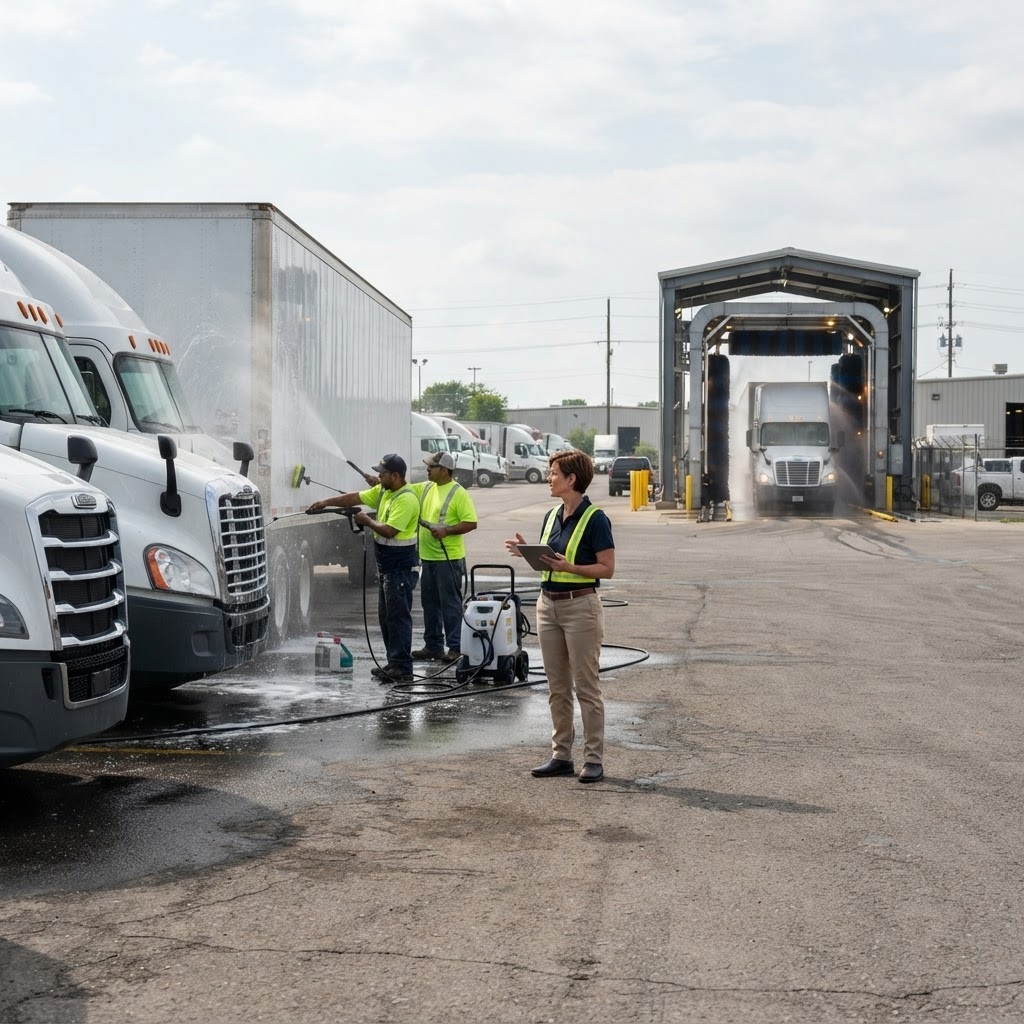
Mobile service can reduce vehicle movement when assets park together during predictable windows. It may suit delivery fleets, dealerships, rentals, corporate vehicles, shuttles, and mixed yards where a vendor can work without disrupting active operations.
When is a fixed truck wash the better option?
A fixed facility may be preferable when trucks already pass it, a depot prohibits washing, drainage or water access is unsuitable, specialized underbody or automated equipment is required, or only a few vehicles need occasional service.
Can a fleet use both models?
Yes. A fleet might use scheduled mobile maintenance washes at major yards and fixed facilities for remote units, specialized cleaning, or route exceptions. A hybrid policy should define when each channel applies so quality and invoices stay consistent.
Service-model comparison
Frequently asked questions
Is mobile fleet washing always cheaper?
No. It may reduce vehicle movement, but site complexity, volume, operating windows, and service scope determine total cost.
Can mobile washing handle semi-trucks?
It can when the vendor, equipment, site, access, height, runoff plan, and scope are appropriate for tractors and trailers.
Which option is more environmentally compliant?
Neither model is automatically compliant. The operator and site must follow applicable wastewater, stormwater, chemical, and property requirements.