Fleet Washing Wastewater Compliance: A Buyer’s Site Checklist
Written and reviewed by SLYYYDE N WASH Fleet Operations · United States commercial service guidance · Research methodology
Key takeaways
Map storm drains and runoff paths before service.
Never treat sanitary-sewer discharge as automatically allowed.
Put containment, recovery, disposal, and spill duties in writing.
Verify requirements with the local authority that controls the site.
Why is fleet wash water a compliance concern?
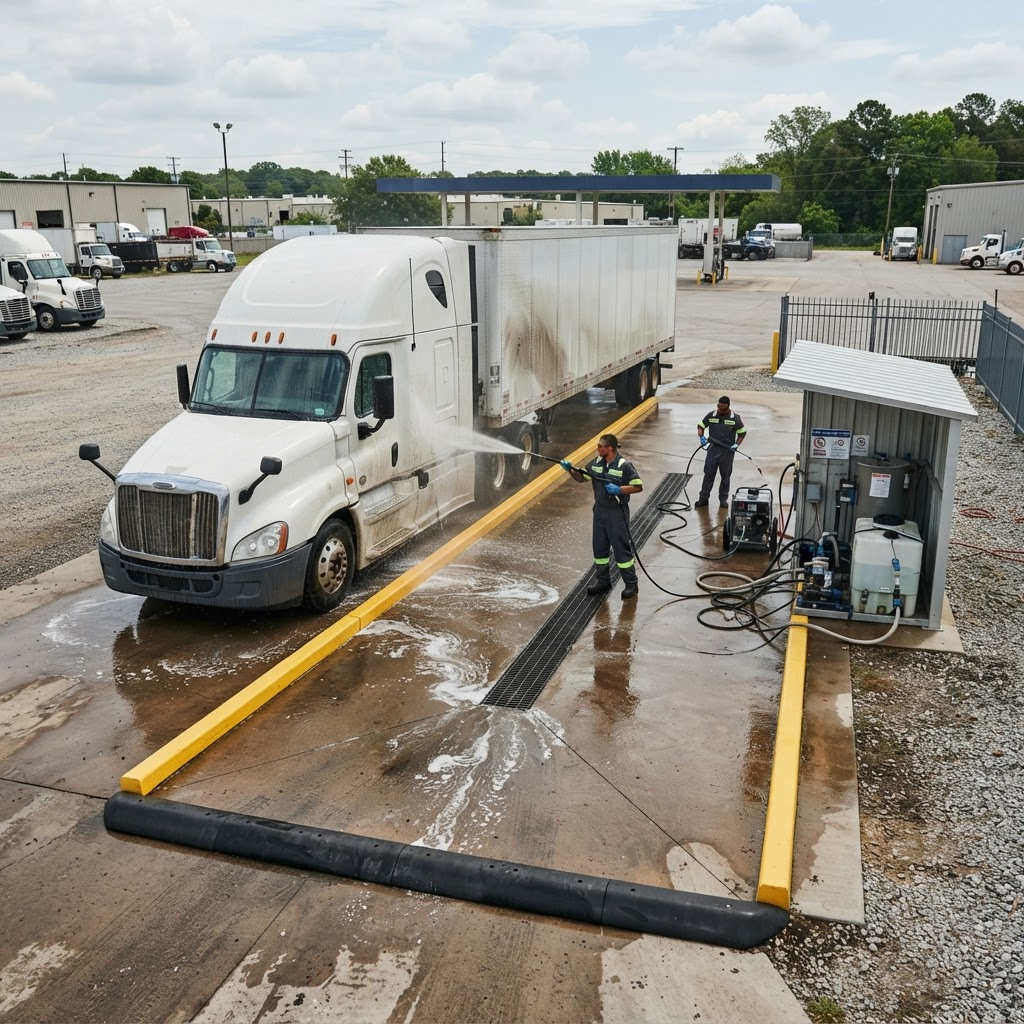
EPA guidance explains that pollutants carried by stormwater can reach waterways through municipal storm sewer systems. Vehicle and equipment washing can mobilize detergents, sediment, petroleum residue, metals, and grime. Requirements vary, so a general guide cannot approve a site-specific discharge.
What should a site review before the first wash?
Identify every drain, slope, ditch, soil area, waterway, and indoor connection near the work zone. Determine who owns the property, who controls the sewer, whether permits or written approvals apply, and where recovered water or solids will go.
Site map and drain identification
Containment and recovery method
Chemical and safety data
Transport or approved disposal destination
Spill response and weather shutdown plan
What should the fleet vendor document?
The proposal should state what the crew brings, what the customer provides, which drains require protection, how wash water and solids are managed, who handles disposal records, and who stops work when weather or site conditions defeat the plan.
Pre-service compliance record
Sources and limitations
EPA National Pollutant Discharge Elimination System (NPDES)
EPA Stormwater Discharges from Municipal Sources
Published prices and schedules are planning references, not universal facts or site-specific quotes. This article provides operational information, not legal advice. Confirm current requirements with the authority responsible for your site.
Frequently asked questions
Can fleet wash water go into a storm drain?
Do not assume it can. Verify the site-specific requirements with the authority that regulates the drain and discharge.
Can recovered wash water go into a sanitary sewer?
Only when the sewer authority and applicable rules allow it. Pretreatment, permits, limits, or disposal elsewhere may be required.
Is a mobile wash vendor responsible for all compliance?
Responsibilities depend on law, permits, property rules, and contracts. Fleet and property operators should verify duties rather than transfer them by assumption.