How to Choose a Car Detailing Package Without Paying for the Wrong Work
Written and reviewed by SLYYYDE N WASH Fleet Operations · United States commercial service guidance
Key takeaways
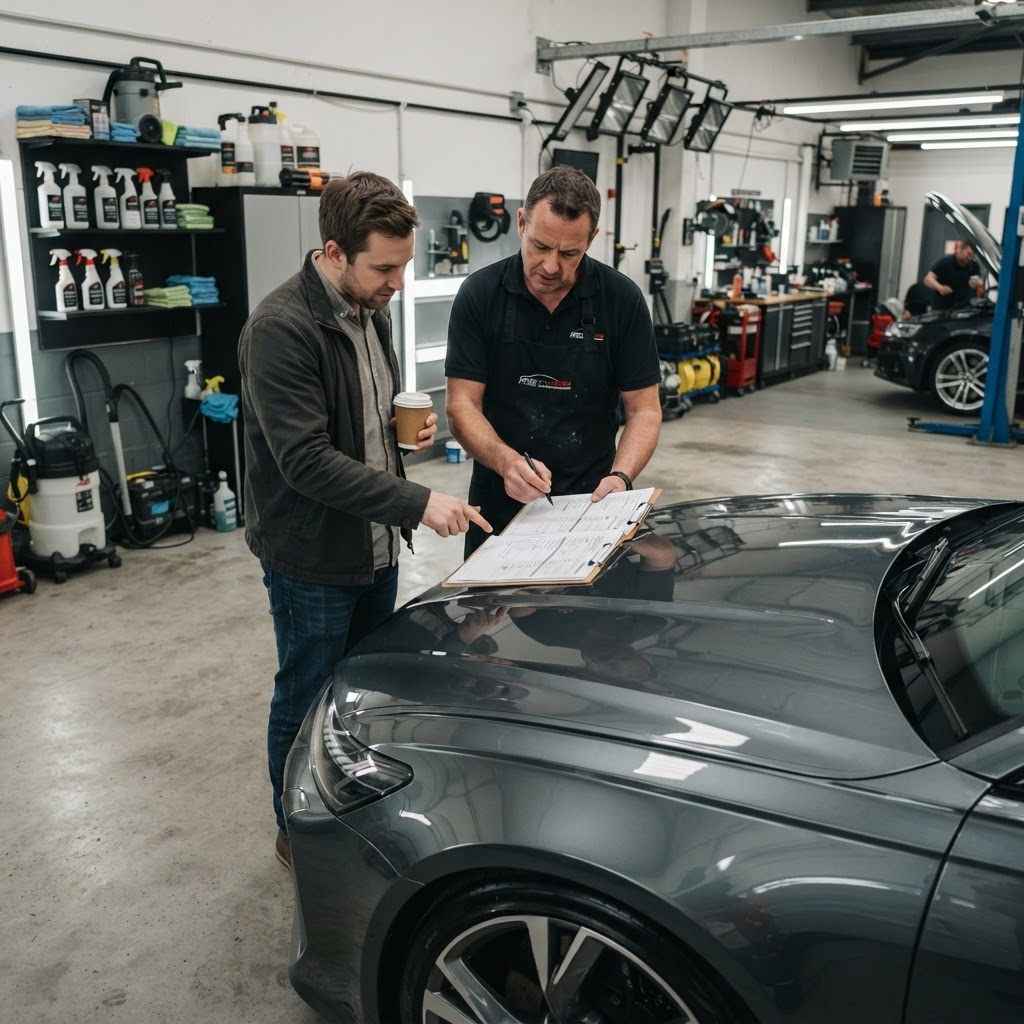
Describe the problem in photos and plain language.
Separate maintenance cleaning from restoration work.
Ask for exclusions, add-ons, and expected outcomes in writing.
Do not confuse a longer menu with a better fit.
What should a customer inventory first?
Note interior stains, pet hair, odors, child-seat areas, paint contamination, wheels, glass, sap, bird waste, scratches, coatings, and access constraints. Mention the vehicle’s use and deadline because a commuter, family SUV, and show vehicle have different priorities.
Which words need clarification?
Deep clean, full detail, stain removal, odor removal, paint enhancement, ceramic, and showroom finish can mean different things. Ask for the process, not only the adjective. No ethical provider can guarantee every stain, odor, scratch, or defect disappears without inspection.
How should a quote be compared?
Compare surfaces, steps, time, products, exclusions, arrival window, water and power assumptions, cancellation terms, and outcome language. A lower price may simply omit the difficult part of the work.
Package-fit worksheet
Continue your research
Correction vs. Detailing — Understand the difference between cleaning, decontamination, polishing, correction, and protection before requesting a quote.
Sources and limitations
Published prices and schedules are planning references, not universal facts or site-specific quotes. This article provides operational information, not legal advice. Confirm current requirements with the authority responsible for your site.
Frequently asked questions
Is a full detail the same everywhere?
No. Package names are not standardized; compare the actual scope.
Should I book the most expensive package?
Not automatically. Book the package that fits the condition and desired result after confirming inclusions.
Can detailing remove every odor?
No guarantee is responsible without identifying the source, material, and contamination. Some odors require repair or replacement.