Microfiber Towel Care for Detailers: A Contamination-Control System
Written and reviewed by SLYYYDE N WASH Fleet Operations · United States commercial service guidance
Key takeaways
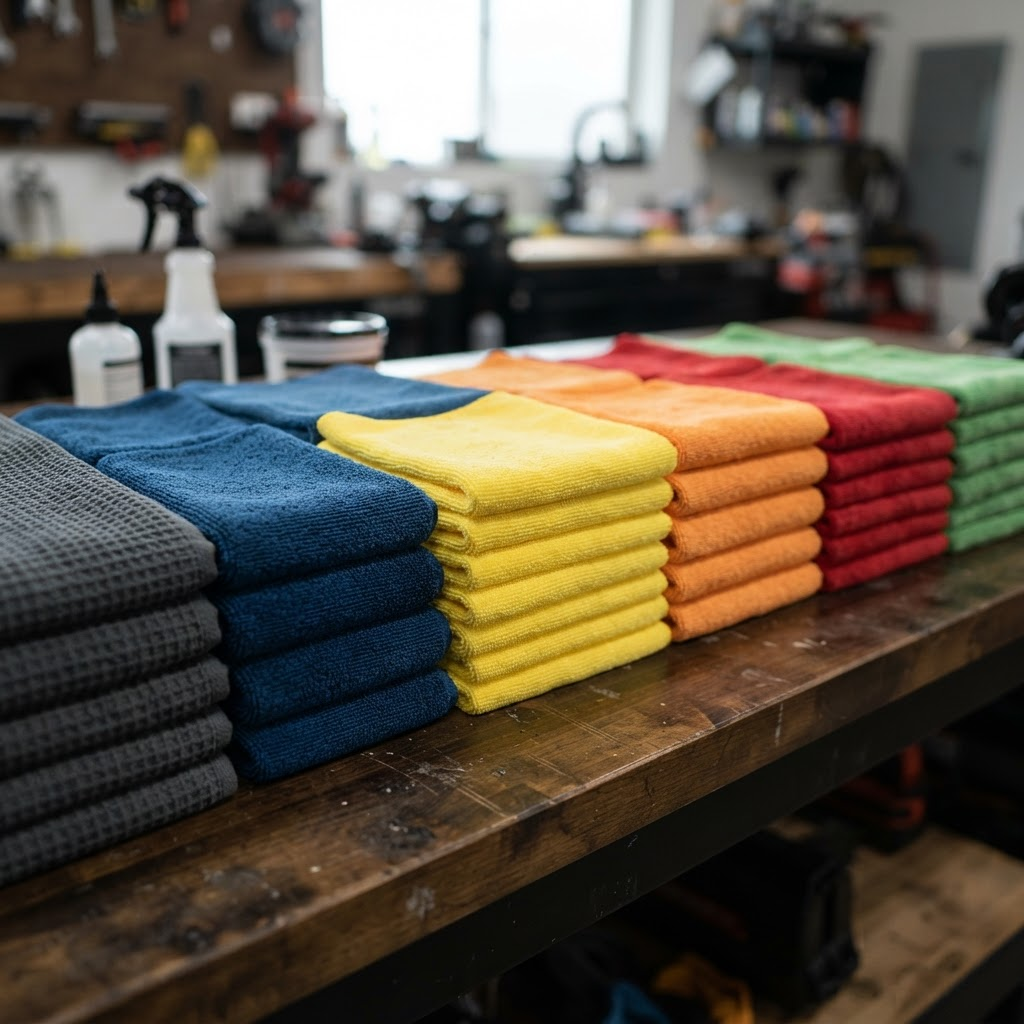
Color-code or label towels by surface and task.
Keep wheel, engine, glass, interior, and paint workflows separate.
Inspect and retire towels that hold grit, hard debris, or chemical residue.
Do not use fabric softener or uncontrolled heat when the towel maker prohibits it.
Why is towel separation a quality issue?
Wheels and lower panels can carry brake dust, sand, tar, and heavy soil. If that towel reaches paint or glass, it can spread contamination and create scratches or streaks. Separation reduces the consequence of a single missed inspection.
What should a wash-and-inspection system include?
Use labeled bins for clean, used, paint, glass, interior, and wheel towels. Inspect before use, wash compatible loads, dry as directed, and record or remove towels that no longer meet the finish standard. A towel process is especially important for recurring fleet work.
How should customers evaluate a detailer?
Ask how towels and tools are separated, how contaminated towels are handled, and whether the provider defines the expected finish. Customers do not need a color chart, but they should hear a credible contamination-control answer.
Towel assignment
Continue your research
Correction vs. Detailing — Understand the difference between cleaning, decontamination, polishing, correction, and protection before requesting a quote.
Waterless vs. Rinseless Wash — Understand when waterless and rinseless methods fit, when they do not, and how soil level changes the risk of marring.
Sources and limitations
Published prices and schedules are planning references, not universal facts or site-specific quotes. This article provides operational information, not legal advice. Confirm current requirements with the authority responsible for your site.
Frequently asked questions
Can all microfiber towels be washed together?
Not if contamination and product residue can transfer. Follow the towel maker’s care instructions and separate high-soil loads.
When should a towel be retired?
When it retains grit, hard debris, chemical residue, odor, damage, or no longer meets the intended finish standard.
Does a more expensive towel prevent scratches?
No towel removes the need for inspection, lubrication, clean process, and appropriate soil handling.