Parking Lot and Parking Garage Cleaning Cost in 2026: Scope, Methods, and RFP Checklist
Written and reviewed by SLYYYDE N WASH Commercial Property Research · United States commercial service guidance · Research methodology
Key takeaways
Do not compare a sweeping bid with a washing-and-degreasing bid.
Use both area and space count to check the bidder’s assumptions.
Treat oil removal, gum, columns, stairs, elevators, drains, and upper levels as explicit scope lines.
Plan closures, resident or employee notices, vehicle relocation, ventilation, and reopening criteria before award.
What does parking lot or garage cleaning cost in 2026?
Published commercial-cleaning estimates span widely because one project may be a dry sweep and another may involve degreasing, pressure washing, recovery, and multiple occupied levels. For budgeting, request a unit price by square foot or parking space plus mobilization and options. Do not publish or accept a single average without defining the method, soil, access, and water plan.
Which cleaning methods belong in the scope?
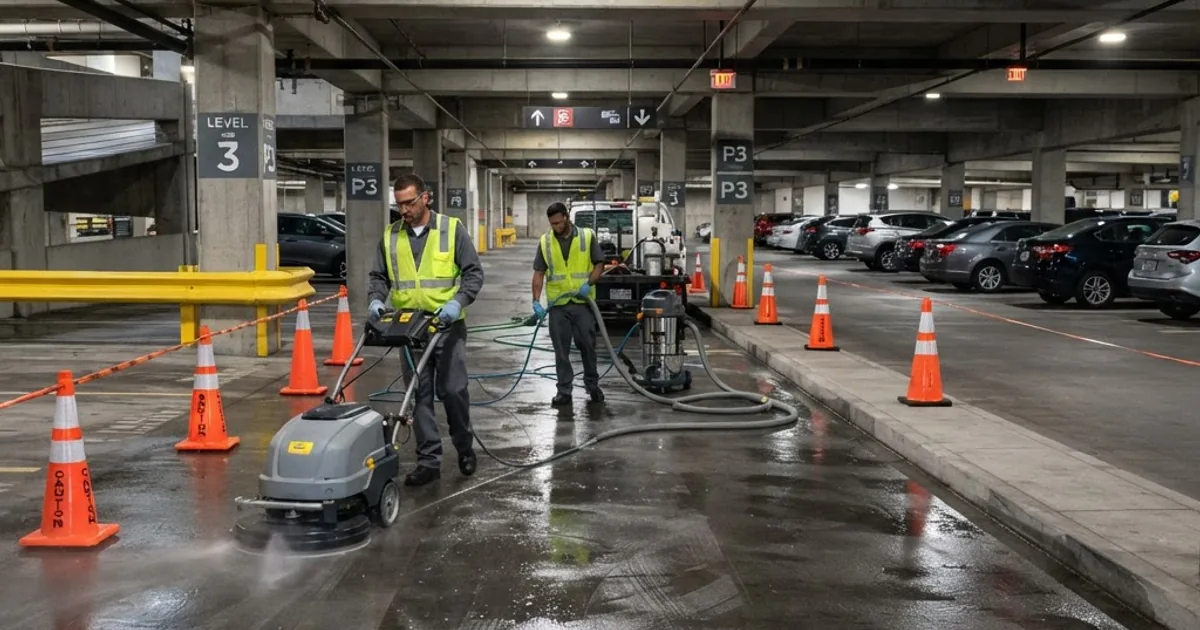
A complete specification may combine mechanical sweeping, hand detail at edges, pretreatment, hot- or cold-water washing, surface cleaning, oil-spot treatment, gum removal, drain and elevator protection, recovery, and approved disposal. Garages also require attention to low clearances, ventilation, electrical systems, traffic coatings, joints, and occupied areas.
What makes a garage different from an open lot?
Ramps, levels, columns, curbs, wheel stops, pipes, low ceilings, poor drainage, ventilation, traffic coatings, active tenants, and limited staging reduce production. Water migration into elevators, electrical rooms, retail space, or lower levels is a material planning risk—not a minor exclusion.
How should an RFP define traffic and access?
State closure phasing, tow policy, notice periods, entry and exit requirements, accessible-space continuity, security escorts, noise windows, drying time, and weather contingencies. Ask bidders to show production by phase and the condition required before vehicles or pedestrians return.
Verified plans, square footage, level count, and space count
Surface/coating type and known defect areas
Drain map, containment points, and discharge approval
Vehicle relocation, barricades, spotters, and reopening process
How do you inspect completed parking cleaning?
Agree on representative test areas and attainable outcomes before full production. Inspect oil spots, corners, curbs, wheel stops, ramps, stairs, drains, and residue under consistent lighting. Some historic stains or coating damage may remain; the contract should distinguish cleaning acceptance from restoration.
Parking cleaning bid normalization
Continue your research
Commercial Washing Cost 2026 — Plan a 2026 commercial pressure washing budget with published price ranges, scope variables, a square-foot worksheet, and quote-comparison questions.
Commercial Cleaning Frequency 2026 — Build a 2026 commercial exterior cleaning schedule by property type, surface, traffic, climate, soil, inspection triggers, and business risk.
Dumpster Pad Cleaning 2026 — Research restaurant dumpster pad cleaning frequency, pricing inputs, grease and odor controls, dry-clean-first workflow, wastewater questions, and vendor scope.
Sources and limitations
OSHA — Walking-Working Surfaces
U.S. EPA — Stormwater Discharges from Industrial Activities
Published prices and schedules are planning references, not universal facts or site-specific quotes. This article provides operational information, not legal advice. Confirm current requirements with the authority responsible for your site.
Frequently asked questions
Is parking garage cleaning priced per space?
It may be, but space count alone misses drive aisles, ramps, columns, stairs, and levels. Ask for measured scope and assumptions.
Will pressure washing remove every oil stain?
No. Age, porosity, prior treatment, coating condition, and contamination depth affect results. Define attainable acceptance after testing.
Can a garage stay open during cleaning?
Some projects can be phased, but traffic, pedestrians, water, equipment, ventilation, and curing or drying conditions require a site-specific plan.
Should striping be protected?
Yes. Document coating and striping condition, cleaning method, test areas, exclusions, and responsibility before work.