Restaurant Dumpster Pad Cleaning in 2026: Frequency, Cost, Grease, Odor, and Wastewater
Written and reviewed by SLYYYDE N WASH Commercial Property Research · United States commercial service guidance · Research methodology
Key takeaways
Fix leaking bags, bins, compactors, and used-oil handling before paying to wash the same spill repeatedly.
Remove solids before adding water; washing debris toward a drain is not a control plan.
Never assume grease-laden wash water may enter a storm drain or sanitary sewer.
Price the enclosure, gates, walls, slab, containers, recovery, access, and service frequency as separate assumptions.
How often should a restaurant dumpster pad be cleaned?
Inspect at least as part of routine opening or closing operations and after leaks, missed pickups, storms, or pest activity. Service may range from weekly in high-volume or problem areas to monthly or as-needed in controlled sites. Health, lease, brand, waste-hauler, sewer, stormwater, and local requirements can establish different obligations.
What drives dumpster pad cleaning cost?
Cost follows enclosure size, wall and gate scope, amount and type of residue, container movement, access window, hot-water or specialty equipment, odor treatment, solids handling, containment, recovery, disposal, and recurrence. Photos help, but a vendor may need a site visit to distinguish routine maintenance from accumulated corrective work.
What is a dry-clean-first workflow?
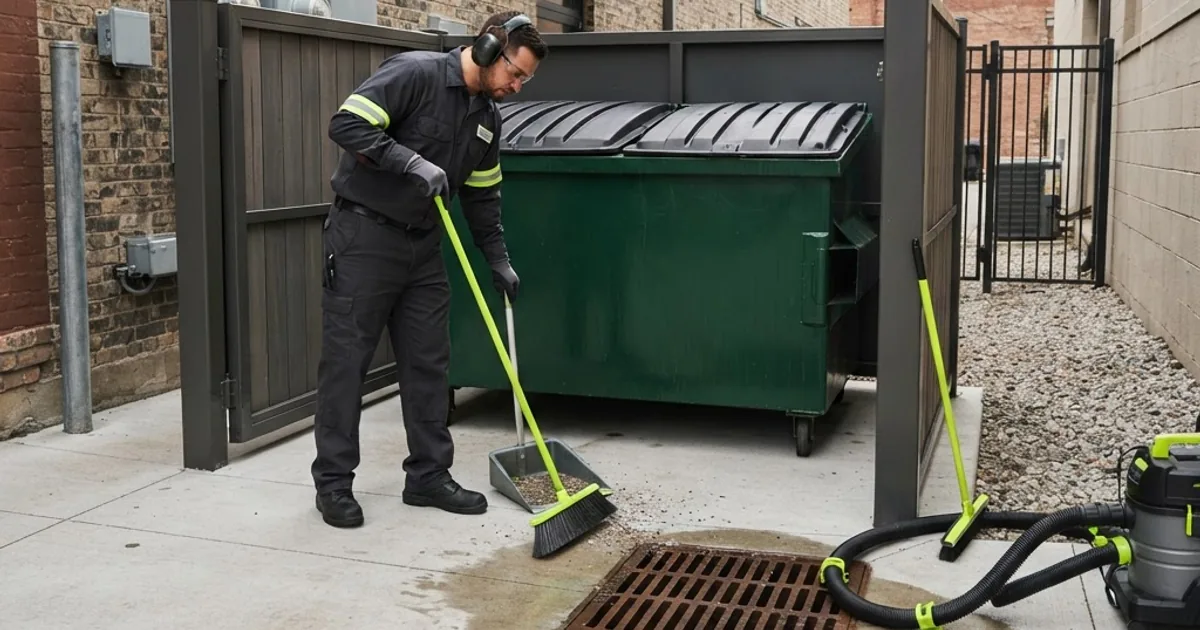
Secure the work zone, stop active leaks, remove loose cardboard and food solids, scrape or absorb heavy residue, and containerize waste before introducing water. Then protect flow paths, use the least aggressive compatible method, recover wastewater as required, remove remaining solids, and leave the area safely reopened.
Coordinate with waste pickup so containers can be safely accessed or moved
Keep used-oil systems and grease interceptors out of the wash scope unless specifically planned
Protect employees, vendors, customers, drains, doors, and neighboring tenants
Record recurring leak sources for operational correction
Why do wastewater rules matter at a dumpster enclosure?
Wash water can carry food solids, fats, oils, grease, detergents, sediment, and other pollutants. EPA stormwater guidance establishes the broader risk, but the controlling local sewer and stormwater authorities decide site-specific discharge requirements. Sanitary sewer access is not automatic permission.
What should a restaurant ask a cleaning vendor?
Ask the vendor to map drains and flow paths, identify chemicals, explain solids and wastewater handling, define what happens to containers and compactor equipment, state weather limits, document insurance, and distinguish cleaning from pest control, waste hauling, plumbing, interceptor service, or repair.
Dumpster pad service scope
Continue your research
Commercial Cleaning Frequency 2026 — Build a 2026 commercial exterior cleaning schedule by property type, surface, traffic, climate, soil, inspection triggers, and business risk.
Commercial Washing Cost 2026 — Plan a 2026 commercial pressure washing budget with published price ranges, scope variables, a square-foot worksheet, and quote-comparison questions.
Parking Cleaning Cost 2026 — Compare 2026 parking lot and garage cleaning bids by square foot, space, scope, access, oil treatment, sweeping, wastewater, and traffic control.
Sources and limitations
U.S. EPA — Stormwater Discharges from Municipal Sources
Published prices and schedules are planning references, not universal facts or site-specific quotes. This article provides operational information, not legal advice. Confirm current requirements with the authority responsible for your site.
Frequently asked questions
Can dumpster pad wash water go down a storm drain?
Do not assume it can. Identify the drain and verify requirements with the local authority before service.
Does pressure washing solve dumpster odor permanently?
Not if leaking containers, trapped solids, missed pickups, pests, or damaged surfaces remain. Cleaning should be paired with source control.
Is dumpster pad cleaning the same as grease trap service?
No. Grease interceptors and traps require specialized service and must not be treated as part of routine surface washing unless explicitly handled by qualified providers.
Can every stain be removed?
No. Porous concrete, old grease, rust, chemical damage, and worn coatings can retain discoloration after soil is removed.