Fleet Washing Weather Contingency Plan: Keep Routes Safe and Predictable
Written and reviewed by SLYYYDE N WASH Fleet Operations · United States commercial service guidance
Key takeaways
Set stop-work triggers before weather arrives.
Use official forecasts and on-site observations together.
Prioritize safety and site control over hitting a cosmetic target.
Document reschedules and define how exceptions affect billing.
Which weather conditions change the plan?
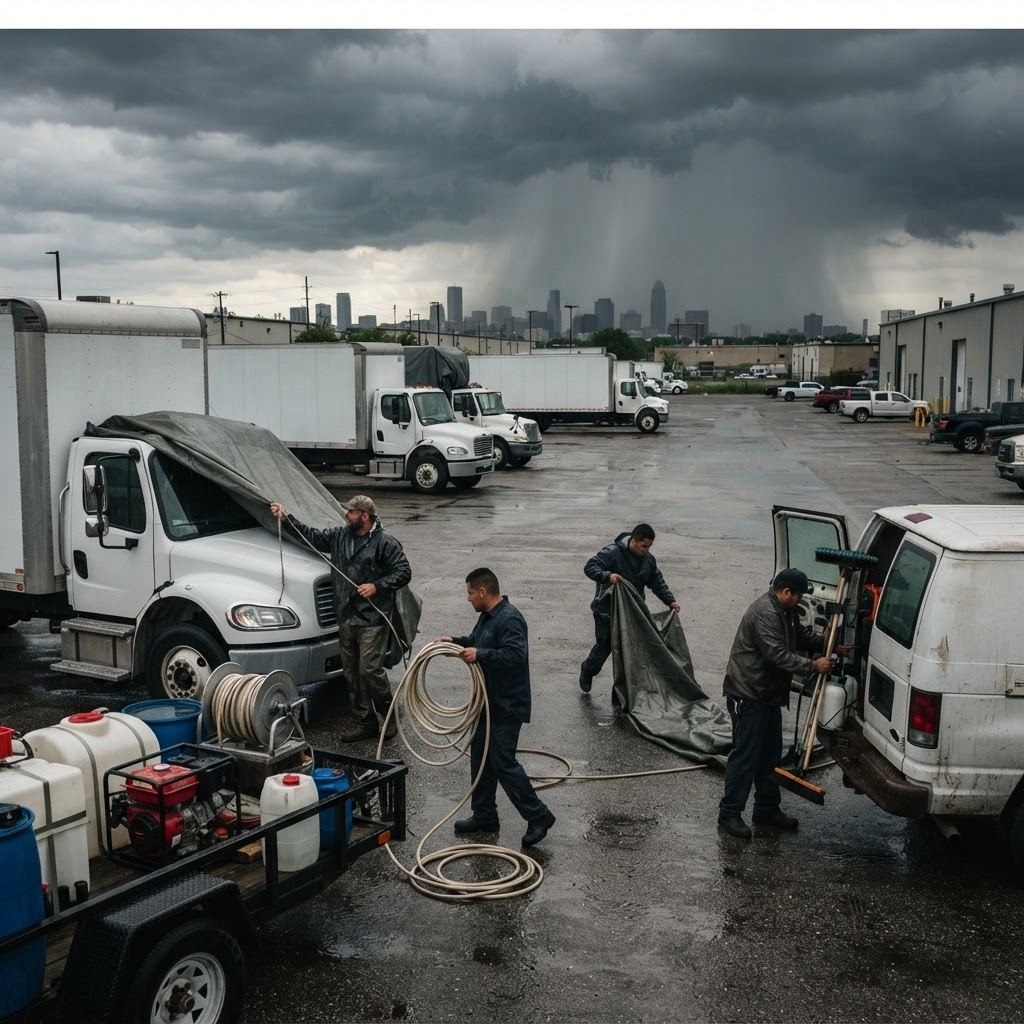
Lightning, high wind, heavy rain, flooding, freezing runoff, extreme heat, snow and ice, and poor visibility can create different risks. The trigger should reflect the work, equipment, surface, crew, and site—not a generic temperature number.
How should managers communicate a delay?
Name who monitors, when the decision is made, which locations are affected, how drivers are notified, and whether priority or indoor units can be moved forward. Avoid promising a new time until access and conditions are credible.
Why does weather affect wastewater?
Rain can overwhelm containment or carry wash water beyond the intended work area; freezing conditions can create slip hazards. Weather control is part of environmental and safety planning, not just customer convenience.
Weather decision tree
Continue your research
Fleet Wash Frequency — Choose a fleet wash frequency using duty cycle, climate, contamination, brand standards, safety visibility, and vehicle type—not a generic calendar.
Fleet Wash Water Compliance — A practical buyer checklist for commercial fleet wash water, storm drains, containment, discharge approval, vendors, and local environmental requirements.
Sources and limitations
NOAA — National Weather Service
National Weather Service — Heat Safety
U.S. EPA — Stormwater Discharges from Municipal Sources
Published prices and schedules are planning references, not universal facts or site-specific quotes. This article provides operational information, not legal advice. Confirm current requirements with the authority responsible for your site.
Frequently asked questions
Should a fleet wash in light rain?
Only if the site, method, safety, quality, and discharge plan still work. Rain is not automatically harmless.
Who decides to stop work?
The contract should name the responsible operations contact, while the crew must be empowered to stop unsafe work.
Can indoor washing solve every weather problem?
No. Indoor facilities introduce ventilation, drainage, clearance, chemical, and property requirements.