How to Wash a Car Without Sending Pollution Into a Storm Drain
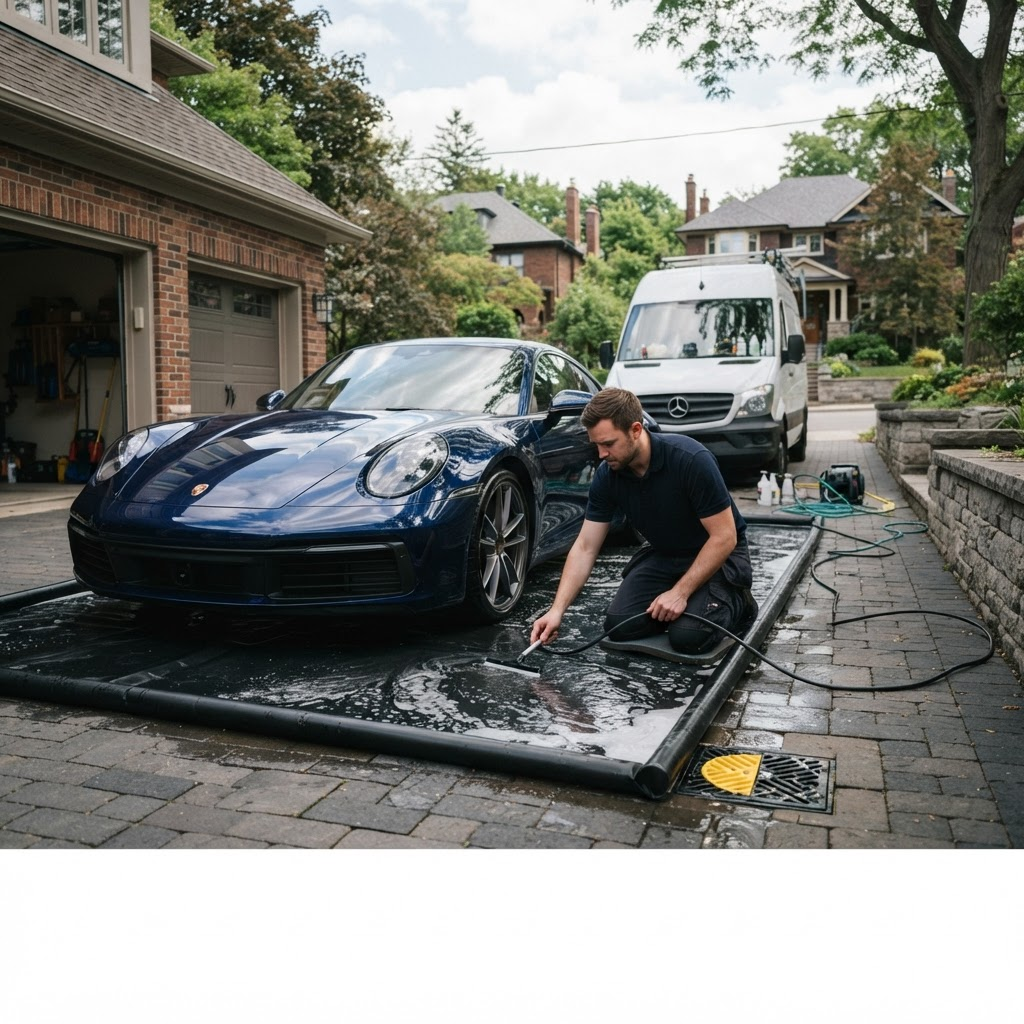
Written and reviewed by SLYYYDE N WASH Fleet Operations · United States commercial service guidance
Key takeaways
Map drains before the first bucket or pressure washer starts.
Never assume a storm drain leads to a treatment plant.
Use automotive chemistry and the least water needed for the job.
Ask the property owner or sewer authority about local discharge rules.
Why does a clean-looking driveway still create runoff risk?
Stormwater systems commonly move runoff untreated to local waterways. A driveway can look clean while vehicle film, tire residue, detergent, and fine sediment are mobilized by the wash. The relevant question is where the water flows after it leaves the vehicle.
What should a customer check before booking?
Look for curb inlets, trench drains, slopes, landscaping, and neighboring property. Tell the provider about the surface, available water, weather, and any property rules. A professional should be willing to define the wash-water plan instead of promising that every location is automatically suitable.
Identify drains and the direction of flow
Confirm property permission and utility responsibilities
Pause during rain or when containment cannot work
Keep oily absorbents and recovered solids out of drains
What is the practical low-risk workflow?
Use dry cleanup first, wash on an appropriate impervious area, protect or avoid drains, use measured automotive products, collect or redirect wastewater only as allowed, and document unusual contamination. Local rules control the final answer.
Before-you-wash checklist
Continue your research
Fleet Wash Water Compliance — A practical buyer checklist for commercial fleet wash water, storm drains, containment, discharge approval, vendors, and local environmental requirements.
Sources and limitations
U.S. EPA — Stormwater Discharges from Municipal Sources
Published prices and schedules are planning references, not universal facts or site-specific quotes. This article provides operational information, not legal advice. Confirm current requirements with the authority responsible for your site.
Frequently asked questions
Can car wash water enter a storm drain?
Do not assume it can. Verify the site-specific rule with the authority responsible for the storm system.
Is biodegradable soap automatically safe for stormwater?
No. Biodegradability does not make a discharge automatically permitted or pollutant-free.
Does mobile detailing solve runoff compliance?
No. Mobile service can improve planning, but the site, method, discharge path, and applicable rules still matter.