Tire Pressure and Detailing: The Five-Minute Safety Check Customers Forget
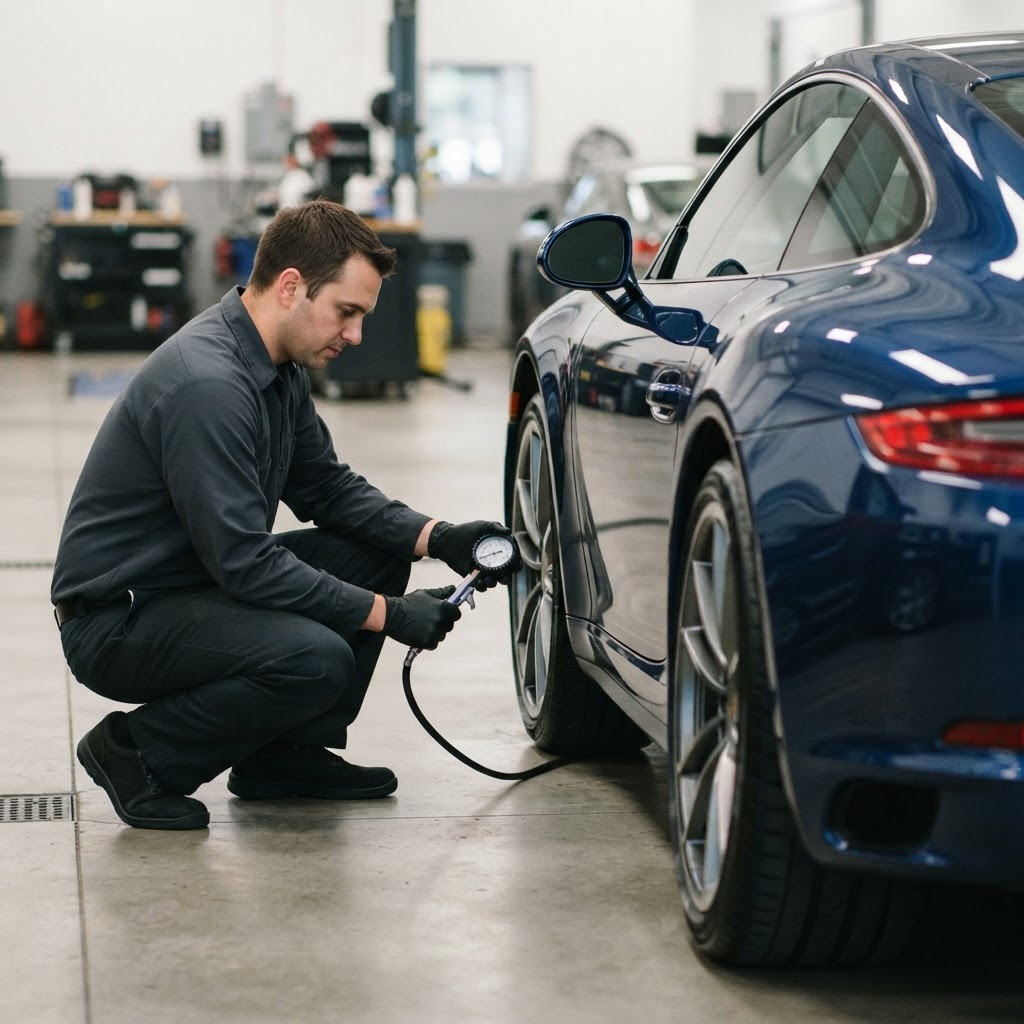
Written and reviewed by SLYYYDE N WASH Fleet Operations · United States commercial service guidance
Key takeaways
Use the driver-door or owner-manual pressure specification.
Check tires cold and account for the vehicle’s load recommendation.
Inspect tread, sidewalls, valve stems, and uneven wear.
Do not hide damage with tire dressing or claim to repair a tire.
What should the owner’s pressure number come from?
NHTSA explains that the correct pressure is found on the vehicle information placard or in the owner’s manual, not simply the maximum pressure printed on the tire sidewall. The vehicle, load, and tire setup determine the correct value.
What can a detailer responsibly observe?
A detailer can notice visibly low tires, cracking, bulges, exposed cords, uneven wear, or a warning light and recommend a qualified inspection. They should not diagnose internal damage or inflate beyond the vehicle’s specification without the right process.
Why clean wheels before inspecting?
Brake dust and grime can hide cracks, corrosion, leaks, and tread or sidewall details. Cleaning improves visibility, but a clean appearance does not make a damaged tire safe.
Wheel-side safety check
Continue your research
Summer Heat Detailing — Plan summer car care around hot panels, UV exposure, heat safety, cabin comfort, tires, and product limitations.
Sources and limitations
NHTSA — Tire Pressure Monitoring Systems
Published prices and schedules are planning references, not universal facts or site-specific quotes. This article provides operational information, not legal advice. Confirm current requirements with the authority responsible for your site.
Frequently asked questions
Can a detailer check tire pressure?
Some may offer a basic check, but confirm the provider’s scope and use the vehicle specification. Tire repair remains a tire-service task.
Does tire shine protect tires?
Product claims vary; tire dressing does not correct pressure, tread, or structural damage.
Can I drive with the TPMS light on?
Follow NHTSA and vehicle-manufacturer guidance and have the condition checked promptly.